Teo's music book, classical & Soulsa CDs now available, free samples!
    Givnology Wellness Arts  Hop To Forum Categories  Arts Appreciation  Hop To Forums  Visual - Beautiful Images    Interesting Architectural Structures
Page 1 2 3 4 5 6 7 8 9 
Go
New
Find
Notify
Tools
Reply
  
  Login/Join 
Teo
Avatar State
Picture of Teo
Posted Hide Post
Great inspiring architecture and posts!!! Clap


From: http://csc.apolyton.net/scenarios/mexico.shtml

quote:
The Aztecs entered Anáhuac (the Valley of Mexico) in the mid-thirteenth century, but it was not until 1325 when they founded their capital city, Tenochtitlán, in the place where an eagle was sighted killing a snake on a cactus. Gradually the Aztecs transformed their capital from a miserable village of thatched huts to a grand city with adobe houses and stone temples. Paralleling the sophistication of their city, the Aztecs put themselves on the road to empire.


PYRAMID OF THE MOON
From: http://members.cox.net/davehanson/aztec/

quote:
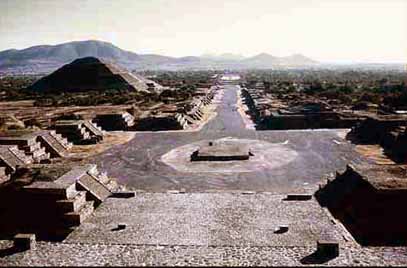
Teotihuacan was an abandoned ghost city by the time the Aztecs found it, and gave it its name, which means "the place where men become gods". No one knows the true name of the city or the people who lived there (who once numbered 200,000). The huge site is laid out on both sides of the "Avenue of the Dead", which was perfectly aligned on a north/south axis. At one end of the avenue was the Plaza of the Moon, surrounded by several flat-topped step pyramids shown in the foreground above. In the background is the large Pyramid of the Moon, which I enjoyed climbing, especially because that end of the site was relatively deserted early in the morning.


PYRAMID OF THE SUN

From: http://www.crystalinks.com/pyrsun_moon.html

quote:
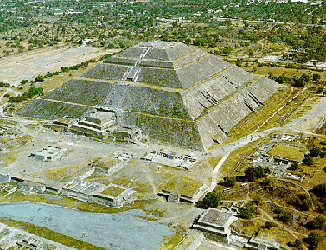
The Pyramid of the Sun, built in the 2nd century AD, dominates the landscape of the ancient city of Teotihuacan in Mexico.

Teotihuacan -the place of the Gods - was the first true city in Mesoamerica, at its peak - 600 AD - it housed more than 100,000 people.

It is the third largest pyramid in the world and the largest in the Teotihuacan complex.

It's sides are 700 feet long, it is about 200 feet high, and is actually a succession of pyramids built one on top the other over the centuries. The pyramids and many other structures at Teotihuacan are stepped, rather than smooth sided like the Egyptian pyramids, and the stones of which they are made are not so large that there would be a mystery about how they were moved as there is with the Egyptian pyramids, the Moai statues of Easter Island, and the Nasca Lines.

At its peak time - most of Teotihuacan was plastered, and the pyramids were painted bright red.


from the same site:


STREET OF THE DEAD

Well, if that gives you the creeps, a bad joke to make up for the deadheadedness...


Walk softly but carry a BIG PEACE
 
Posts: 1697 | Location: The Planet of Berkeley | Registered: Sat Apr 26 2003Reply With QuoteReport This Post
Merit-Amun
Picture of Inda
Posted Hide Post
Thank you for the fabulous images Teo.

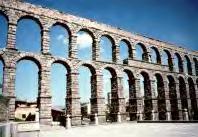
Now we come to a Roman aqueduct.

One of the greatest surviving monuments of Roman engineering, this aqueduct stretches from the walls of the old town to the edges of Sierra de Guadarrama. It is about 2950 feet long although the section where the arches are divided in two levels is about 900 feet. It is made of rough-hewn massive granite blocks, joined without mortar or clamps.

 
Posts: 4031 | Location: Toronto, Ontario, Canada | Registered: Sat Apr 26 2003Reply With QuoteReport This Post
Merit-Amun
Picture of Inda
Posted Hide Post
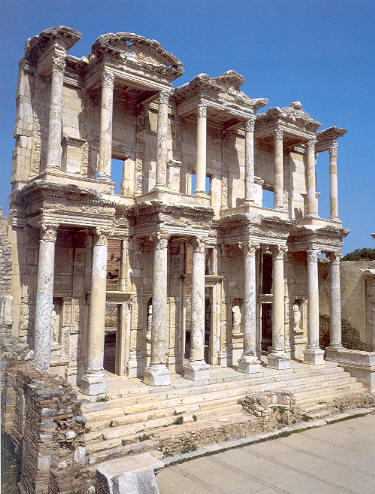
Ephesus in Turkey was a major centre of Greek and Roman Asiatic colonies. It once had a population of 300,000.

Here is the "Library of the Ancient Ruins."
Ephesus, Turkey (c.356BC)
Photo by: Nick Meers

ephesus
 
Posts: 4031 | Location: Toronto, Ontario, Canada | Registered: Sat Apr 26 2003Reply With QuoteReport This Post
Posted Hide Post
I love this thread. When I have a bit of time I'll get some help with posting some images.
Thank you all for your contribution. The images are awesome.

Love,
Sue Cat Cat2
 
Posts: 1666 | Location: Toronto, Ontario, Canada | Registered: Mon Dec 22 2003Reply With QuoteReport This Post
Posted Hide Post
Thank you for this wonderfully informative thread.I love all the pictures and the text.

I see you girls are having problems posting your images; I hope the problem can be corrected, otherwise we will miss a lot of beautiful images.

Gisele
 
Posts: 1171 | Registered: Sun May 11 2003Reply With QuoteReport This Post
Teo
Avatar State
Picture of Teo
Posted Hide Post
btw I am working on the uploading and attachment viewing issue here and it may mean we all grajimicate to using the photo albums, what joy, more OMWORK you all! he he.. Googly SystemError Aaah Juggle


Walk softly but carry a BIG PEACE
 
Posts: 1697 | Location: The Planet of Berkeley | Registered: Sat Apr 26 2003Reply With QuoteReport This Post
Posted Hide Post
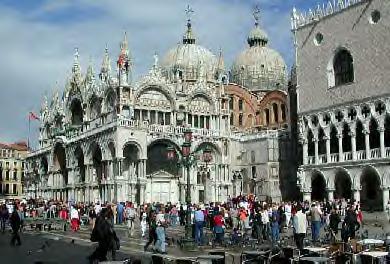
St Mark's Cathedral, Venice, the most important church in the city since Early Christian times but the cathedral of Venice only since 1807. The body of the apostle St Mark, stolen from its resting place in Alexandria, was brought to Venice in 828 and subsequently interred in the new church. Virtually nothing of the 9th-century church survives; it was badly damaged by fire in 976 and only temporarily repaired. The present basilica was begun c. 1050 and completed in the 1090s.

 
Posts: 1972 | Location: Toronto, Ontario, Canada | Registered: Wed Aug 06 2003Reply With QuoteReport This Post
Merit-Amun
Picture of Inda
Posted Hide Post
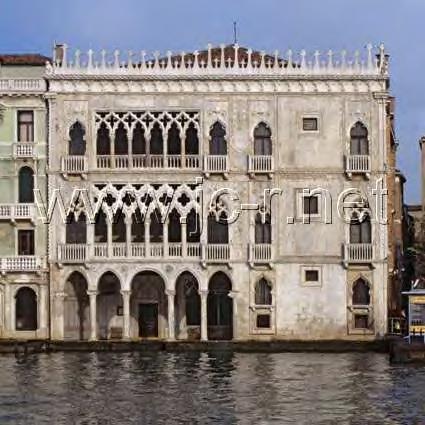
Thank you Vicky for your post. I love Venezian architecture.

The Ca d'Oro.
A jewel of gothic palace architecture on the Canal Grande. It was built from 1421-1434/38.

 
Posts: 4031 | Location: Toronto, Ontario, Canada | Registered: Sat Apr 26 2003Reply With QuoteReport This Post
Merit-Amun
Picture of Inda
Posted Hide Post
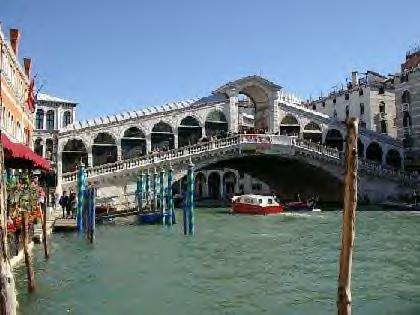
The Ponte di Rialto (Rialto Bridge) is the true heart of Venice. The current structure was built in just three years, between 1588 and 1591, as a permanent replacement for the boat bridge and three wooden bridges that had spanned the Grand Canal at various times since the 12th Century. It remained the only way to cross the Grand Canal on foot until the Accademia Bridge was built in 1854.

 
Posts: 4031 | Location: Toronto, Ontario, Canada | Registered: Sat Apr 26 2003Reply With QuoteReport This Post
Merit-Amun
Picture of Inda
Posted Hide Post
Now we are going to another part of the world to look at a wonderful Byzantine structure.

The Church of Hagia Sophia, associated with one of the greatest creative ages of man, was also the Cathedral of the Ecumenical Patriarchate of Constantinople for more than one thousand years. Originally known as the Great Church, because of its large size in comparison with the other churches of the then Christian World, it was later given the name of Hagia Sophia, the Holy Wisdom of Christ, the second person of the Holy Trinity.

Justinian conceived the grandiose project of rebuilding the Great Church from its foundations. Nothing like it was ever built before or after. Construction work lasted five years [532-537] and on December 27, 537, Patriarch Menas consecrated the magnificent church.

 
Posts: 4031 | Location: Toronto, Ontario, Canada | Registered: Sat Apr 26 2003Reply With QuoteReport This Post
Posted Hide Post
Now that it is easy to post images here I will give it a go:

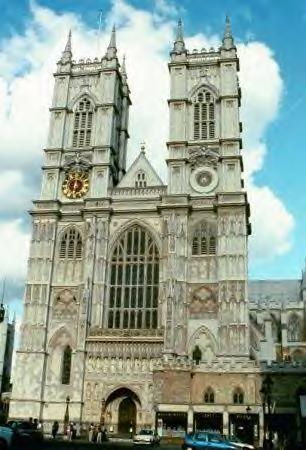
Westminster Abbey is a living church as well as an architectural masterpiece of the thirteenth to sixteenth centuries. Founded as a Benedictine monastery over a thousand years ago, the church was rebuilt by Edward the Confessor in 1065 and again by Henry III in the thirteenth century in the Gothic style we see today.

Known as the House of Kings, the Abbey is the final resting place for monarchs including Edward I (called ‘Longshanks’), Henry III, Henry V and Henry Vll who built a magnificent Lady Chapel here. The shared vault containing Elizabeth I and her half-sister Mary I (‘Bloody Mary’), and the tomb of Mary Queen of Scots are echoes of the bloodstained and turbulent Tudors.

The Abbey has been the setting for Coronations since that of William the Conqueror in 1066 and is home to the Coronation Chair. It has also witnessed numerous other royal occasions such as weddings and funerals.

In Poets’ Corner you will be surrounded by memorials to Geoffrey Chaucer, William Shakespeare, Charles Dickens, Rudyard Kipling, Jane Austen, the Brontë sisters and many others. Great scientists and musicians are also remembered in the Abbey, from Newton and Darwin to Purcell and Handel. The grave of the Unknown Warrior is to be found in the Nave.

Westminster Abbey is central to the life of the nation. Worship is offered every day. You are always welcome at any of the regular services.

 
Posts: 1666 | Location: Toronto, Ontario, Canada | Registered: Mon Dec 22 2003Reply With QuoteReport This Post
Merit-Amun
Picture of Inda
Posted Hide Post
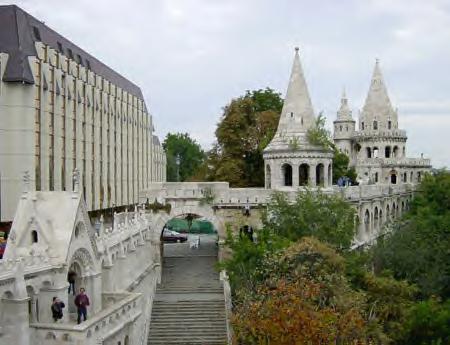
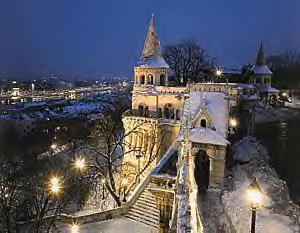
Budapest, Hungary.

No one seems to know why this is so named - it has certainly never been called on to defend anything. The stories say that in the old days this was where the fishermen defended Castle Hill from. It stands behind Matyas Church, overlooking the river and was built around 1900 by the same person who was responsible for the reconstruction of the church. There is a small fee to pay to climb up it, but it is worth it for the views. It makes for some of the finest photo opportunities in all of Budapest.

 
Posts: 4031 | Location: Toronto, Ontario, Canada | Registered: Sat Apr 26 2003Reply With QuoteReport This Post
Merit-Amun
Picture of Inda
Posted Hide Post
Budapest, Hungary.

On the left of the Bastion is the Hilton hotel which blends in beautifully with the surrounding architecture.

 
Posts: 4031 | Location: Toronto, Ontario, Canada | Registered: Sat Apr 26 2003Reply With QuoteReport This Post
Posted Hide Post
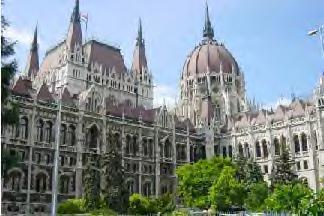
Parliament Building - Budapest, Hungary.
This magnificent building, constructed between 1885 and
1904, is undergoing renovations.

Lavish external ornaments of soft limestone cannot tolerate modern polluted air, and they are thus
being replaced by hard stone over the years.

 
Posts: 1972 | Location: Toronto, Ontario, Canada | Registered: Wed Aug 06 2003Reply With QuoteReport This Post
Posted Hide Post
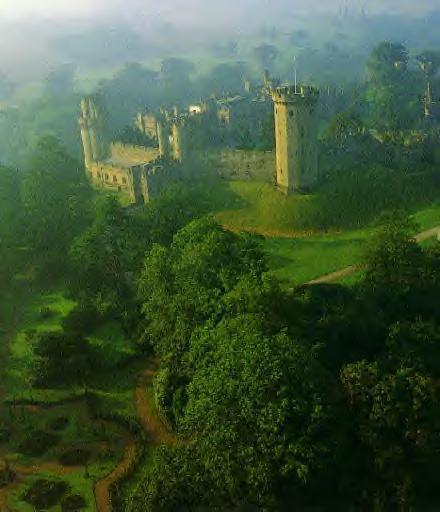
Warwick Castle was founded in 1068 and was rebuilt and updated a number of times. Today it combines castle ruins, largely of the fourteenth century with one of the finest great houses in England.

 
Posts: 1666 | Location: Toronto, Ontario, Canada | Registered: Mon Dec 22 2003Reply With QuoteReport This Post
Teo
Avatar State
Picture of Teo
Posted Hide Post
Great replies, posts and attachments! Like my first post in this topic, I will share some terminology and breakdowns, not hoping any architecture breaks down, he he.. Googly but de-extrapolations, what some of the root terms mean.

The word Architecture has roots in the word Arch, and the arches are an importand design element. Additionally, Arch has roots in the word Arc, and this is the fundamental mathematics of all building and architecture.


Various forms of arches (Sturgis)


More Arch terminology


Perspective section of nave bay of Amiens Cathedral
A) nave arcade, B) triforium, C) clerestory, D) side aisle, E) buttress, F) pinnacle, a) blind arcade, b) compound pier, c) respond, d) mullion, e) tracery, f) traverse rib, g) diagonal rib, h) boss, i) molding profile, j) strut, k) finial

-From Abacus To Zeus, A Handbook Of Art History, James Smith Pierce


Walk softly but carry a BIG PEACE
 
Posts: 1697 | Location: The Planet of Berkeley | Registered: Sat Apr 26 2003Reply With QuoteReport This Post
Picture of Margherita
Posted Hide Post
This thread is truly very interesting and we can go on and on ...
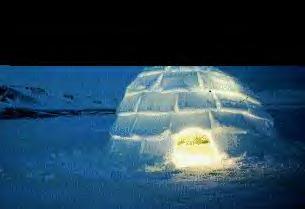
Looking at the Igloo Vicky posted I suddenly was reminded of the Apulia a Region in the South of Italy where there are characteristic buildings called TRULLI.(trullo from Latin turrula which means "little tower")


Alberobello is the name of the little town


Puglia, land of the Trulli
Trulli are circular, conical-roofed white-washed houses built of stone without any use of mortar. Their roofs, topped with pinnacles, are tiled with concentric rows of gray slate and often painted with astrological or religious symbols.
Their origin is obscure but few of these solid-looking constructions date back more than a couple of centuries. (In another text I read instead that these constructions go back to the XIIth century) The greatest concentration of Trulli houses is in and around Alberobello.
The characteristic of this type of construction is that the ambient inside temperature remains almost constant irrelevant of outside temperature, therefore it is relatively warm in the winter and cool in the summer.
Alberobello is a UNESCO World Heritage site, which has concentrations of Trulli with many of them now souvenir and wine shops, boutiques and restaurants.


For those who understand French:

Les trulli

Entre Castellana Grotte et Ostuni, ces petites poivrières grises ou éclatantes de blancheur font partie intégrante du décor. Un décor verdoyant parsemé de vignobles, d’amandiers et d’oliviers. Dans un pays où la pierre abonde, le trullo a résolu pendant des millénaires, d’une manière simple (en apparence) et harmonieuse, les problèmes de l’habitation. On raconte que le seigneur du cru, le comte d’Acquaviva, cherchant à loger les paysans qui travaillaient sur ses terres, le fit dans une ferme provisoire au toit et aux murs en pierres non jointes. Le bâtiment était facilement démontable en cas d’inspection royale alors que Ferdinand I" d’Aragon avait interdit dans la région l’édification d’habitations stables. Cependant il existe un lien manifeste entre les trulli (trullo vient sans doute du latin turrula qui signifie " petite tour ") dont les plus vieux remontent au XII’ siècle, et les " maisons en pain de sucre " de la Syrie du Nord (surtout la région d’Alep) qui existaient déjà dans l’Antiquité. On peut y voir un effet des Croisades et des rapports que le comté d’Edesse et la principauté de Tripoli entretenaient au Moyen Age avec l’Italie à travers la Pouille et l’Apulie.


The name of Alberobello /Beautiful Tree comes from Latin Silva Arboris Belli, because in that Region in the past there was a big region covered with a forest.


Wave2
Love, Margherita
 
Posts: 1780 | Registered: Sat Apr 26 2003Reply With QuoteReport This Post
Merit-Amun
Picture of Inda
Posted Hide Post
Dear Margherita,

Your images are magical Clap

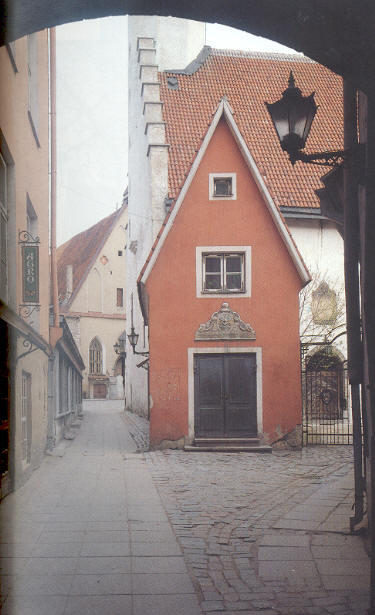
Here is a little old residential house from Tallinn, Estonia. At the present time it is home to a tiny giftshop.

Tallinn
 
Posts: 4031 | Location: Toronto, Ontario, Canada | Registered: Sat Apr 26 2003Reply With QuoteReport This Post
Merit-Amun
Picture of Inda
Posted Hide Post
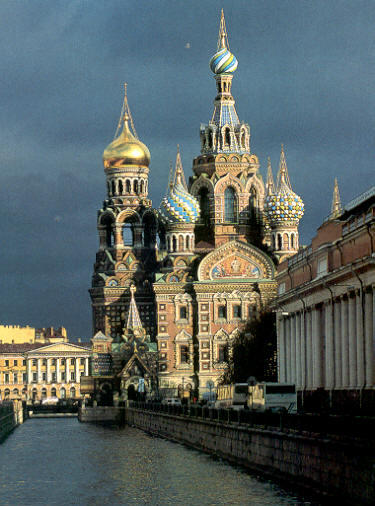
The Church of the Resurrection,
St.Petersburg, Russia

Designed by Alfred Parland in the style of 16th and 17th-century Russian churches, the Church of the Resurrection provides a stark (some would say jarring) contrast to its surroundings of Baroque, Classical and Modernist architecture.

stpetersburg
 
Posts: 4031 | Location: Toronto, Ontario, Canada | Registered: Sat Apr 26 2003Reply With QuoteReport This Post
Merit-Amun
Picture of Inda
Posted Hide Post
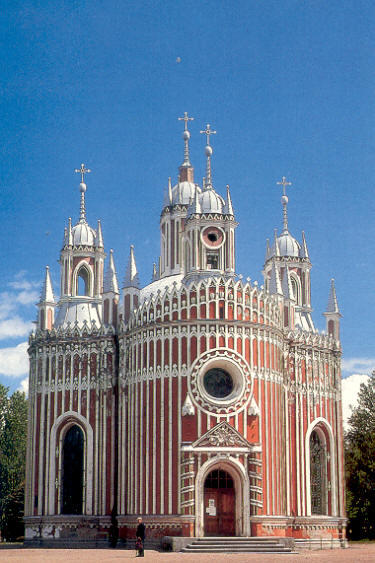
The Cesmenskaya Church
St.Petersburg, Russia.

Architect: Y.M. Felten 1774-1777

chesmenskaya
 
Posts: 4031 | Location: Toronto, Ontario, Canada | Registered: Sat Apr 26 2003Reply With QuoteReport This Post
  Powered by Social Strata Page 1 2 3 4 5 6 7 8 9  
 

    Givnology Wellness Arts  Hop To Forum Categories  Arts Appreciation  Hop To Forums  Visual - Beautiful Images    Interesting Architectural Structures
Content may be subject to copyright. See: http://en.wikipedia.org/wiki/Fair_use
"..for purposes such as criticism, comment, news reporting, teaching, scholarship, or research.."

Submit Site - Web Site Promotion Submit Your Site To The Web's Top 50 Search Engines for Free! Search Engine Submission and Internet Marketing Search Engine Submission & Optimization
Submission to 50,000 Search Engine LAUNCH FREE and FAST Search Engine Submission Living Well Blogs - Blog Catalog Blog Directory

Book of scores!

Classical CD

Original CD
http://teovincent4.blogspot.com
http://stores.lulu.com/teovincent
http://www.myspace.com/teovincent
http://www.youtube.com/teovincent4
http://profiles.google.com/teovincent4
http://www.facebook.com/teo.vincent4
http://linkedin.com/pub/teo-vincent/b/517/b65